

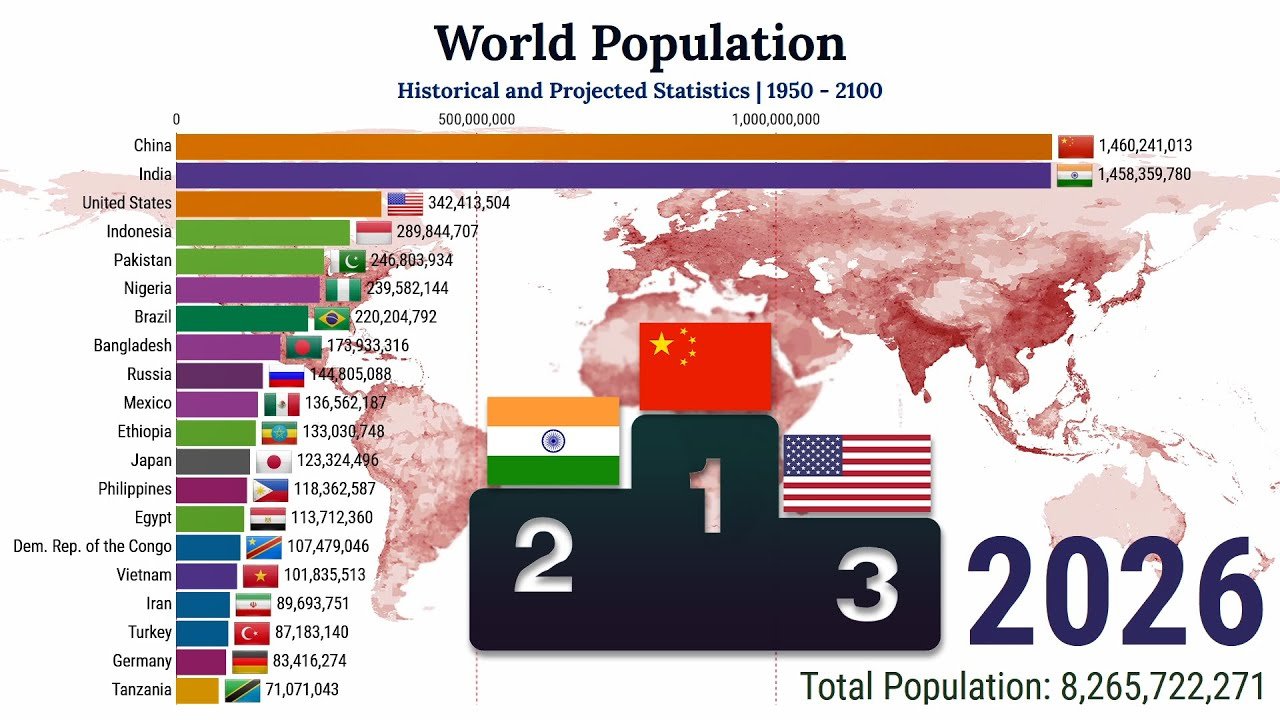
World Population by Country 2026
Understanding the world population by country in 2026 is more important than ever as nations experience rapid demographic changes, urban expansion, aging populations, and migration shifts. In 2026, the global population is projected to cross new milestones, with countries like India, China, the United States, Indonesia, and Pakistan continuing to shape the world’s demographic landscape.
Population growth affects economies, healthcare systems, education, housing, employment, and environmental sustainability. Governments and businesses closely monitor population data to prepare for future challenges and opportunities. Whether you are a student, researcher, marketer, or simply curious about global demographics, analyzing the world population by country 2026 provides valuable insight into how the world is evolving.
This article explores the latest population estimates, fastest-growing countries, declining populations, key demographic trends, and future projections for the coming decades.
Global Population Overview in 2026
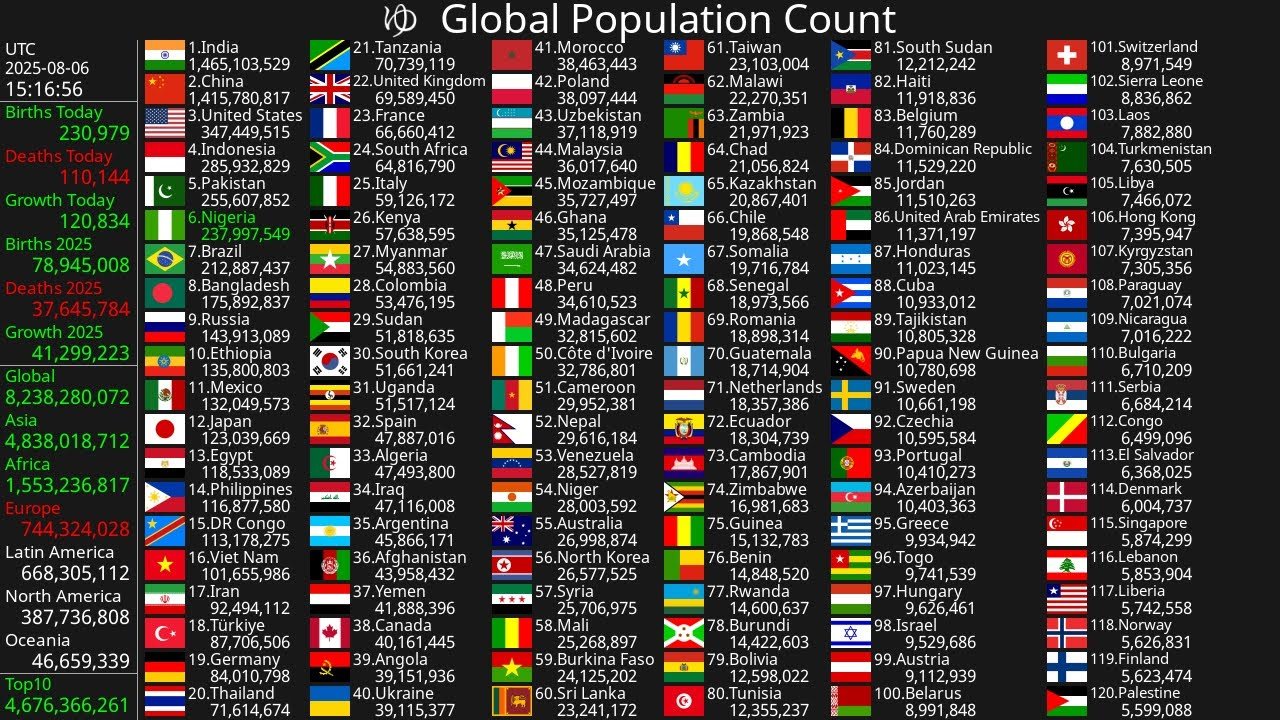
The estimated global population in 2026 is expected to exceed 8.2 billion people. Population growth continues, but at a slower rate compared to previous decades due to declining fertility rates in many countries.
Key Global Population Facts for 2026
- Global population: Approximately 8.2 billion
- Most populous country: India
- Second most populous country: China
- Fastest population growth: Several African nations
- Aging populations: Europe, Japan, and South Korea
- Urban population: More than 57% of people live in cities
Countries with younger populations are likely to experience economic expansion, while nations with aging demographics may face labor shortages and rising healthcare costs.
World Population by Country 2026 Rankings
Below are the estimated top countries by population in 2026.
| Rank | Country | Estimated Population 2026 |
|---|---|---|
| 1 | India | 1.46 Billion |
| 2 | China | 1.41 Billion |
| 3 | United States | 348 Million |
| 4 | Indonesia | 286 Million |
| 5 | Pakistan | 255 Million |
| 6 | Nigeria | 240 Million |
| 7 | Brazil | 219 Million |
| 8 | Bangladesh | 176 Million |
| 9 | Russia | 144 Million |
| 10 | Mexico | 132 Million |
These rankings demonstrate the continued demographic dominance of Asia, while Africa is becoming a major contributor to future global population growth.
Why India Leads the World Population by Country 2026
India remains the most populous nation due to several factors:
High Birth Rates
Although fertility rates are declining, India still records millions of births annually.
Young Population
India has one of the world’s youngest populations, creating a strong workforce for future economic growth.
Urban Expansion
Cities such as Mumbai, Delhi, Bengaluru, and Hyderabad continue to grow rapidly.
Economic Opportunities
The country’s expanding technology and industrial sectors attract migration and support population growth.
India’s demographic advantage may significantly influence global economics over the next decade.
China’s Population Decline in 2026
China remains one of the largest countries by population, but demographic decline has become a major issue.
Causes of Population Decline
Aging Society
China’s elderly population continues to rise rapidly.
Low Fertility Rates
Younger generations are having fewer children due to economic pressures.
Urban Lifestyle Changes
High living costs discourage larger families.
As a result, China’s workforce may shrink in the coming years, impacting long-term economic growth.
Fastest Growing Countries in 2026
Several countries are expected to experience substantial population growth.
Nigeria
Nigeria’s population is rising quickly because of:
- High fertility rates
- Expanding urbanization
- Young demographics
Pakistan
Pakistan continues to grow steadily due to:
- Increasing birth rates
- Improved healthcare
- Expanding cities
Ethiopia
Ethiopia remains one of Africa’s fastest-growing nations with strong population momentum.
Democratic Republic of Congo
The country is projected to become one of the world’s largest populations by 2050.
Countries with Declining Population in 2026
While some nations grow rapidly, others face population decline.
Japan
Japan experiences:
- Low birth rates
- Aging citizens
- Reduced workforce participation
South Korea
South Korea has one of the world’s lowest fertility rates.
Italy
Economic uncertainty and delayed family planning contribute to population decline.
Russia
Russia faces demographic challenges due to lower birth rates and migration issues.
Major Demographic Trends Shaping the World in 2026
The world population by country 2026 reflects several important global trends.
Urbanization Continues to Rise
More people are moving to urban centers for employment, education, and healthcare.
Megacities Are Expanding
Cities with populations above 10 million continue to grow rapidly:
- Tokyo
- Delhi
- Shanghai
- São Paulo
Infrastructure Challenges
Rapid urban growth creates pressure on:
- Transportation
- Housing
- Water supply
- Healthcare systems
Aging Populations in Developed Countries
Many developed countries are seeing a major increase in elderly populations.
Economic Impact
Aging populations may lead to:
- Labor shortages
- Increased pension costs
- Higher healthcare spending
Workforce Automation
Countries increasingly rely on automation and AI to offset workforce decline.
Migration and Population Changes
Migration significantly affects the world population by country in 2026.
Countries Receiving High Immigration
- United States
- Canada
- Germany
- Australia
Reasons for Migration
People migrate for:
- Employment opportunities
- Education
- Political stability
- Better living conditions
Migration helps balance labor shortages in aging economies.
Population Growth and Climate Change
Climate change increasingly impacts population distribution.
Environmental Migration
People are relocating due to:
- Flooding
- Droughts
- Rising sea levels
- Extreme weather
Food and Water Security
Rapid population growth increases pressure on natural resources.
Governments must develop sustainable solutions to support future populations.
Future Population Predictions Beyond 2026
The world population is expected to continue growing for several decades.
Population Forecast for 2030
The global population may exceed 8.5 billion by 2030.
Population Forecast for 2050
The population could reach nearly 9.7 billion by 2050.
Africa’s Role in Future Growth
African nations will contribute most of the future global population increase.
Countries like:
- Nigeria
- Ethiopia
- Tanzania
- Democratic Republic of Congo
are expected to grow rapidly.
Economic Impact of Population Growth
Population changes strongly influence global economics.
Growing Economies
Countries with younger populations may experience:
- Larger workforces
- Increased consumer demand
- Economic expansion
Challenges for Governments
Rapid population growth can strain:
- Healthcare systems
- Schools
- Transportation
- Employment opportunities
Balanced population management remains essential for sustainable growth.
Importance of Tracking World Population by Country 2026
Population data helps governments, researchers, and businesses make informed decisions.
Uses of Population Statistics
- Economic planning
- Infrastructure development
- Public health policies
- Market research
- Education planning
Reliable demographic data is critical for future planning.
Popular Google Search Keywords Related to World Population by Country 2026
Here are important keywords people frequently search related to this topic:
- World population 2026: The
- most populous country in 2026
- global population by country
- population ranking 2026
- India population 2026
- China’s population decline
- fastest growing countries 2026
- world population forecast
- top 10 populous countries
- global demographics 2026
- country population statistics
- future world population
- Africa’s population growth
- urban population trends
- population density by country
Recommended Outbound Link
For accurate and regularly updated population statistics, consider linking to:
Internal Link Anchor Text Ideas
You can internally link this article using anchor texts such as:
- “latest global population statistics”
- “future population growth trends”
- “top countries by population”
- “world demographic changes”
- “population forecast by country”
Image SEO Suggestions
Suggested Image File Name
world-population-by-country-2026-chart.jpg
Suggested ALT Text
“World population by country 2026 ranking chart showing the most populated nations”
Conclusion
The world population by country 2026 reveals major shifts in global demographics, economic power, and future development patterns. India leads the population rankings, China faces demographic decline, and African nations are becoming central to future global growth.
Understanding these trends is essential for governments, businesses, researchers, and individuals preparing for the future. As population dynamics continue to evolve, staying updated on the world population by country 2026 can help you better understand the changing world around you.
If you found this guide useful, share it with others and continue exploring more insights about global population trends and demographic forecasts.
